
Bure
Bure (ブレ) literally means “shake” or “tremble” in Japanese. In animation, it describes unwanted shaking or instability in drawings or shots. It is often used to convey impact, tension, or instability, like an earthquake, an explosion, or nervousness.
Rather than being a random jitter, bure is carefully timed and drawn to create a controlled, rhythmic vibration. Animators might alternate between slightly shifted drawings or reuse one cel while shaking the camera layer. It’s a cost-effective but expressive technique, commonly applied to backgrounds or effects-heavy moments.
The animator can either draw the necessary frames themselves or leave notes for the douga-man to execute it, referencing it directly in the timechart and timesheet.
Timesheet
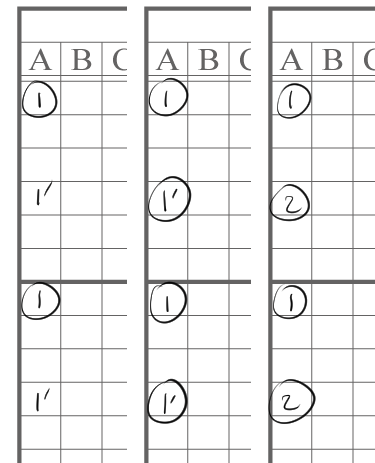
On the timesheet, bure is indicated as standard frame entries.
Timechart
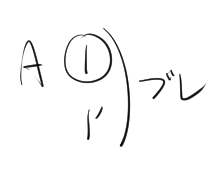
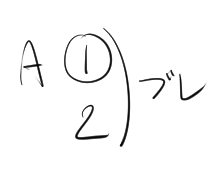
On the timechart, bure is usually marked with a prime (‘) or double prime (”) symbol. It can also be referred to as basic consecutive frames, like A1/A2.
Bure is a simple yet powerful tool in Japanese animation. It allows animators to create tension, energy, and emotional weight with minimal drawings.